
Parasites living inside the human body sounds like something pulled from a horror story—but it’s actually well-established science.
What drives curiosity (and clicks) is the gap between what’s proven and what’s exaggerated online. The evidence is real, documented, and studied across medicine, microbiology, and global health.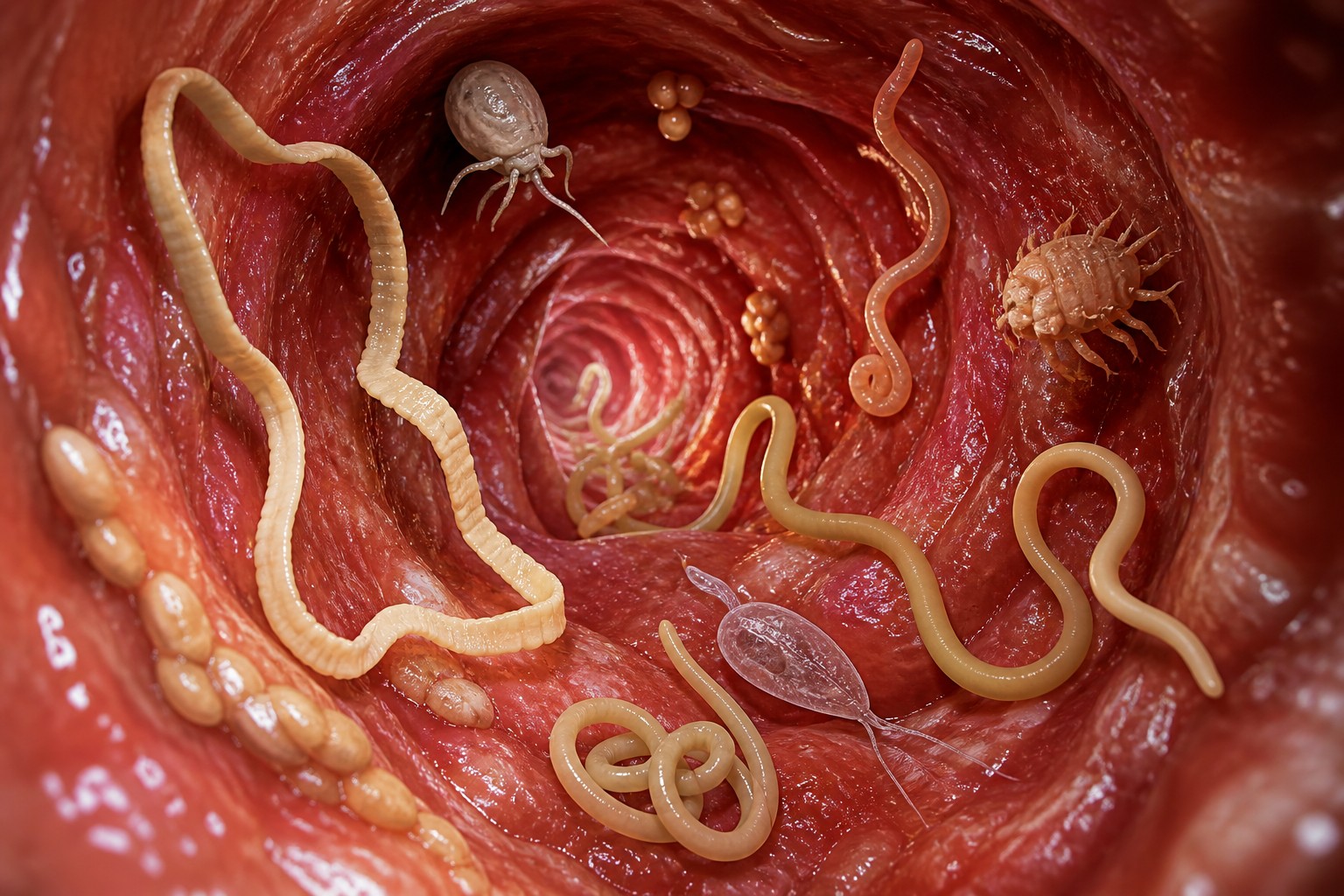
What a Parasite Actually Is
A parasite is an organism that survives by living on or inside a host, drawing nutrients at the host’s expense. In humans, this includes microscopic organisms and larger worms that can inhabit the digestive tract, blood, or tissues.
The existence of parasites in humans is not debated in medicine—it’s confirmed through multiple diagnostic methods used every day.
Direct Observation
Clinicians routinely identify parasites through stool samples, blood smears, and tissue analysis. Under a microscope, eggs, larvae, or full organisms can be clearly seen and classified.
Laboratory Testing
Modern diagnostics go further by detecting parasite DNA, proteins, or immune responses. These tests can confirm infections even when organisms are not easily visible.
Medical Imaging and Procedures
In more advanced cases, imaging tools such as CT scans or ultrasounds have revealed cysts or worms in organs. Surgical removals have also provided direct physical evidence in clinical settings.
Common Parasites Found in Humans
While some infections are rare, others are surprisingly common in certain conditions:
- Roundworms linked to contaminated soil or poor sanitation
- Tapeworms associated with undercooked meat
- Giardia, a microscopic parasite spread through unsafe water
These are documented globally and treated with established medical protocols.
Symptoms: When Parasites Become Noticeable
Not every infection causes symptoms, which is why some cases go undetected. When symptoms do occur, they tend to follow recognizable patterns:
- Digestive disruption such as diarrhea or bloating
- Fatigue or reduced energy levels
- Nutritional deficiencies due to absorption interference
Severe complications are possible but uncommon, especially where healthcare access is strong.
The Gap Between Reality and Online Claims
Here’s where precision matters. The internet often amplifies the idea that parasites are widespread and silently causing countless unexplained symptoms. That narrative doesn’t align with medical data.
Parasites do infect humans—but in developed countries, most infections are identified, treatable, and not nearly as pervasive as often claimed.
The idea that large numbers of people are unknowingly hosting serious infections without symptoms is not supported by mainstream evidence.
Why This Still Matters
Globally, parasitic infections remain a major health issue, especially in regions with limited sanitation and clean water access. In the U.S., cases still occur, typically linked to travel, food contamination, or specific exposure risks—but they are far less common and usually manageable.
The proof is clear: parasites can and do live in the human body. This is backed by decades of scientific observation, testing, and treatment.
What’s less clear—and often overstated—is how common or hidden these infections are in everyday life. Understanding that distinction is what separates fact from fear.