
For most of human history, survival depended on understanding and cooperating with the natural world. Long before modern technology, humans observed patterns in weather, animal behavior, plant cycles, and ecosystems.
This deep awareness formed what we can call human wisdom—a blend of intuition, experience, and learned knowledge.
Alongside it exists nature intelligence, the intricate, self-regulating systems that govern life on Earth.
Today, that partnership has weakened. Industrialization and rapid technological growth have distanced humanity from natural systems. Yet the challenges we now face—climate instability, declining biodiversity, and rising health concerns—are pushing us to revisit this relationship.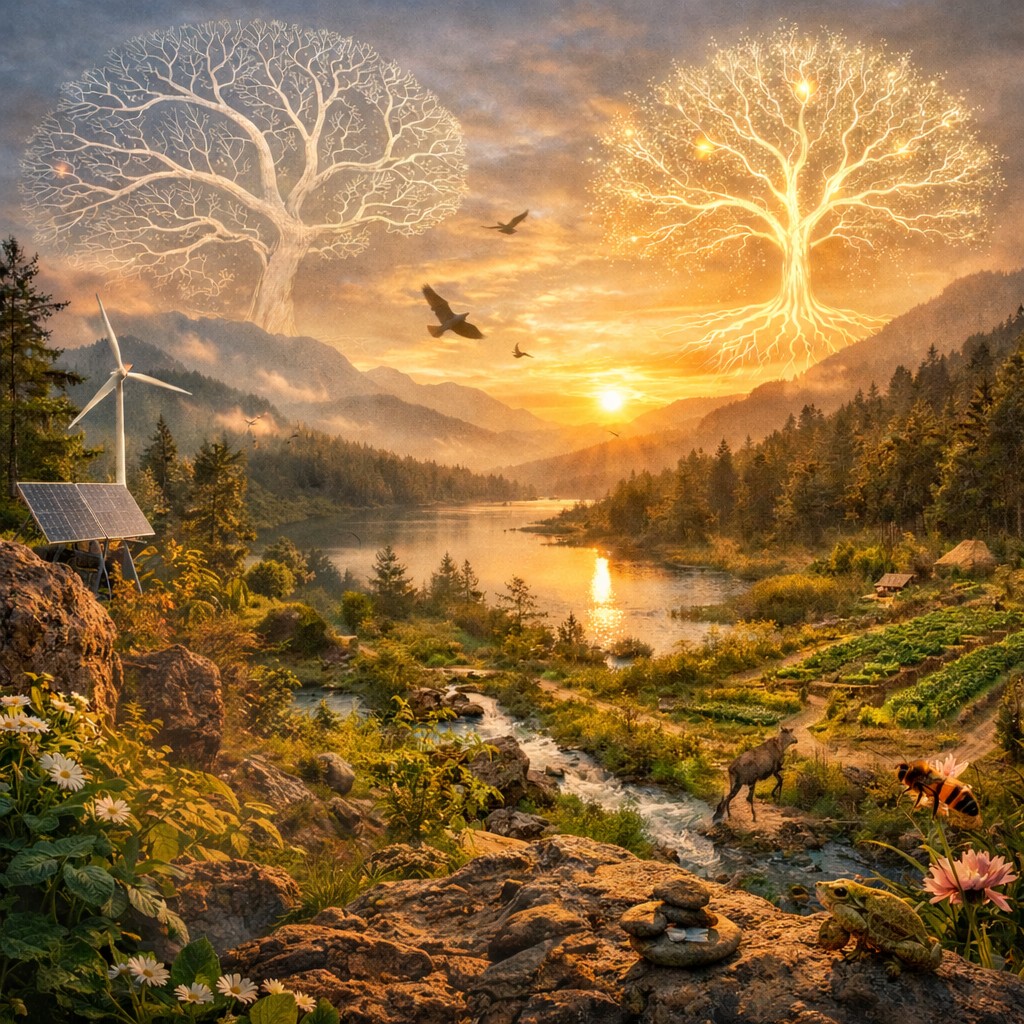
Understanding Nature Intelligence
Nature intelligence refers to the inherent ability of ecosystems to organize, adapt, and sustain life. Forests regulate climate, oceans balance atmospheric gases, and soil ecosystems recycle nutrients with remarkable efficiency.
These systems operate without centralized control, yet they maintain balance through interconnected relationships.
Every element in nature serves a purpose. Predators regulate prey populations, plants convert sunlight into energy, and microorganisms break down organic matter to enrich soil.
This intelligence is not conscious in the human sense, but it is profoundly effective. It has evolved over billions of years, refining systems that are resilient, efficient, and sustainable.
When humans ignore or disrupt these systems, consequences follow. But when we observe and learn from them, we gain access to solutions that are already proven to work.
The Role of Human Wisdom
Human wisdom is more than intelligence or knowledge. It includes judgment, ethical awareness, foresight, and the ability to learn from past mistakes. It allows us to interpret complex systems, anticipate outcomes, and make decisions that consider long-term consequences.
Historically, many indigenous cultures demonstrated this wisdom by living in harmony with their environments. They practiced sustainable hunting, respected seasonal cycles, and used resources in ways that ensured regeneration.
Their knowledge systems were deeply rooted in observation and respect for nature.
In the modern world, human wisdom must evolve to integrate scientific understanding with this older, intuitive knowledge.
Technology alone cannot solve global challenges unless guided by thoughtful, informed decision-making.
Where We Went Wrong
The separation between human systems and natural systems did not happen overnight. It developed gradually as societies prioritized efficiency, growth, and convenience over balance. Natural resources came to be viewed as unlimited commodities rather than parts of a living system.
Urban expansion replaced ecosystems, industrial agriculture depleted soil health, and pollution disrupted natural cycles. In many cases, short-term gains were prioritized over long-term sustainability.
This disconnect has created a paradox: despite unprecedented technological advancement, humanity faces growing environmental and health crises.
The issue is not a lack of intelligence, but a misalignment between human actions and nature’s principles.
Learning From Nature: A Smarter Approach
Working with nature intelligence does not mean abandoning progress. It means redefining progress. By studying natural systems, we can design solutions that are both innovative and sustainable.
In agriculture, regenerative farming practices restore soil health by mimicking natural ecosystems. Instead of depleting nutrients, these methods enhance biodiversity and improve resilience.
In architecture, passive design uses natural light, airflow, and temperature regulation to reduce energy consumption. In engineering, biomimicry draws inspiration from nature’s designs to create technologies that are more efficient.
These approaches demonstrate that nature is not an obstacle to overcome, but a guide to follow.
Health and Human Well-Being
The relationship between human health and nature intelligence is deeply interconnected. Exposure to natural environments has been shown to reduce stress, improve mood, and enhance cognitive function. Diets based on whole, natural foods support metabolic health and reduce the risk of chronic disease.
Modern lifestyles often separate people from these benefits. Processed foods, sedentary habits, and artificial environments contribute to rising health issues. Reintegrating natural elements into daily life—whether through diet, outdoor activity, or mindful living—can restore balance.
Human wisdom plays a key role here by recognizing these patterns and making conscious choices that align with our biological needs.
Technology as a Bridge, Not a Barrier
Technology is often blamed for the disconnect between humans and nature, but it can also be part of the solution. When guided by human wisdom, technology can help us better understand and protect natural systems.
Data analytics can monitor environmental changes, renewable energy can reduce reliance on fossil fuels, and smart design can minimize waste.
The key is intention. Technology should support ecological balance, not undermine it.
The future lies not in rejecting innovation, but in aligning it with the principles that have sustained life for millennia.
A New Philosophy of Progress
To truly work with nature intelligence, society must adopt a new mindset. Progress should not be measured solely by economic growth or technological advancement, but by the health of ecosystems and the well-being of people.
This shift requires collaboration across disciplines—science, philosophy, economics, and culture. It calls for policies that prioritize sustainability, education that emphasizes ecological awareness and communities that value long-term resilience over short-term gain.
Human wisdom must guide these changes, ensuring that decisions are informed, balanced, and future-focused.
Rebuilding the Connection
The path forward is not about returning to the past, but about integrating the best of both worlds. Human wisdom and nature intelligence are not opposing forces—they are complementary. When aligned, they create systems that are both innovative and sustainable.
The challenges facing humanity are complex, but the solutions may be simpler than we think. By observing nature, respecting its processes, and applying thoughtful decision-making, we can rebuild a relationship that benefits both people and the planet.
The future may depend on how well human wisdom can once again work with nature intelligence, rather than against it.
In the end, working with nature is not just an environmental choice—it is a fundamental shift toward a more intelligent way of living.